On A Dark River

_MG_7019
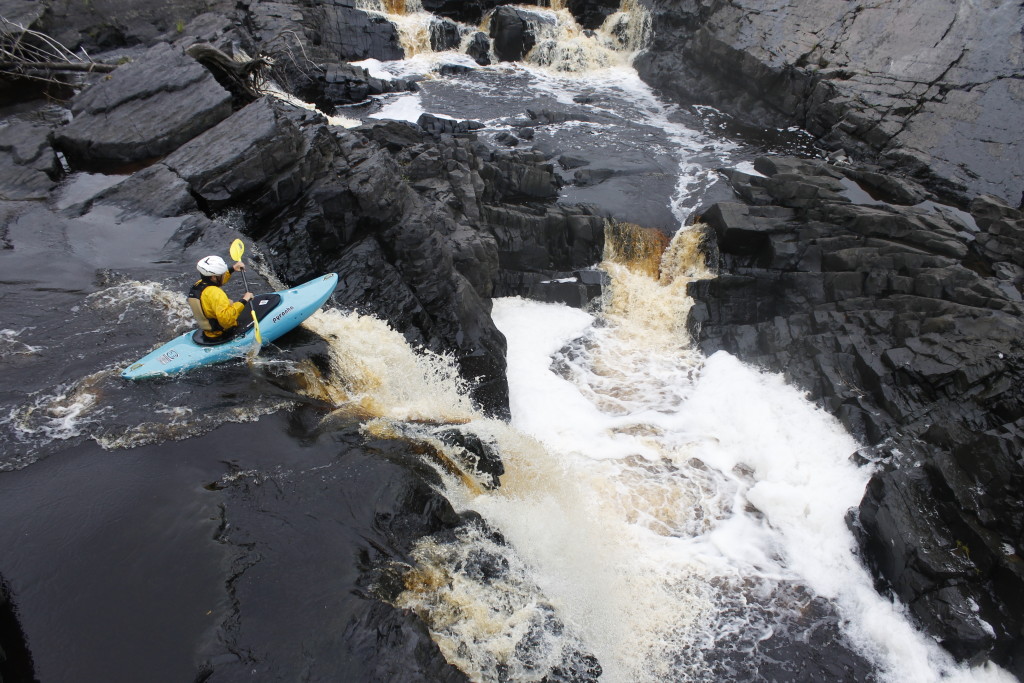
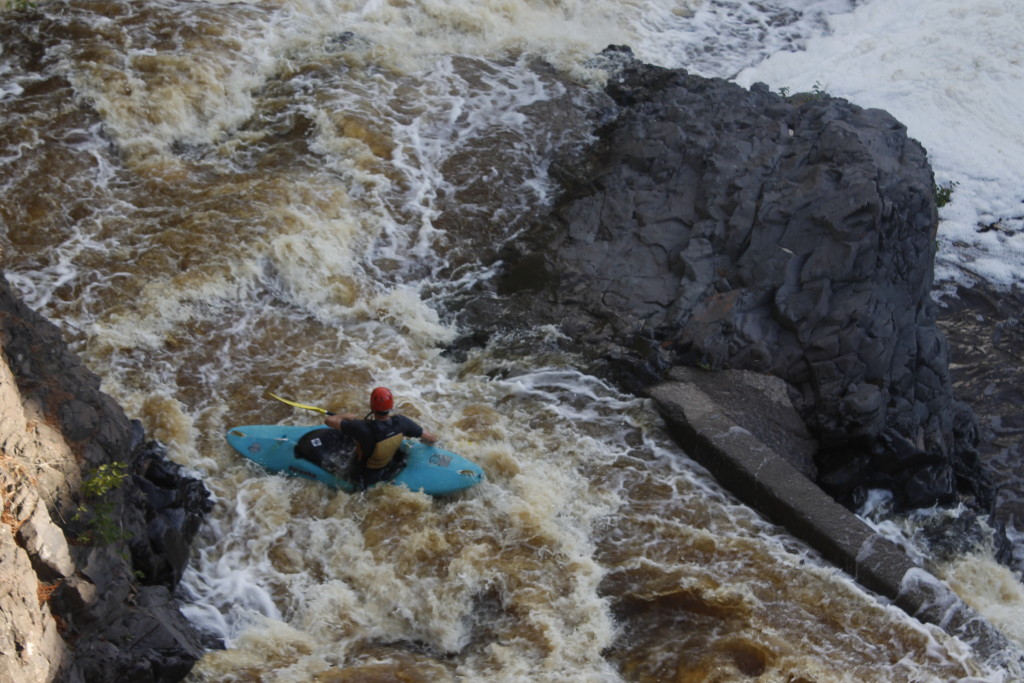
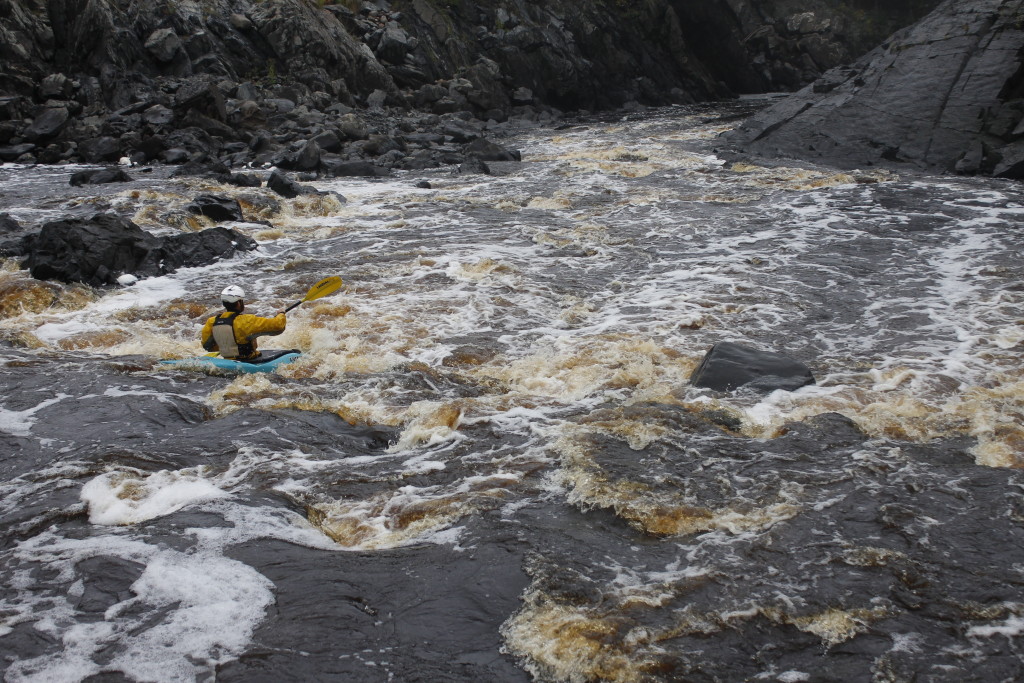
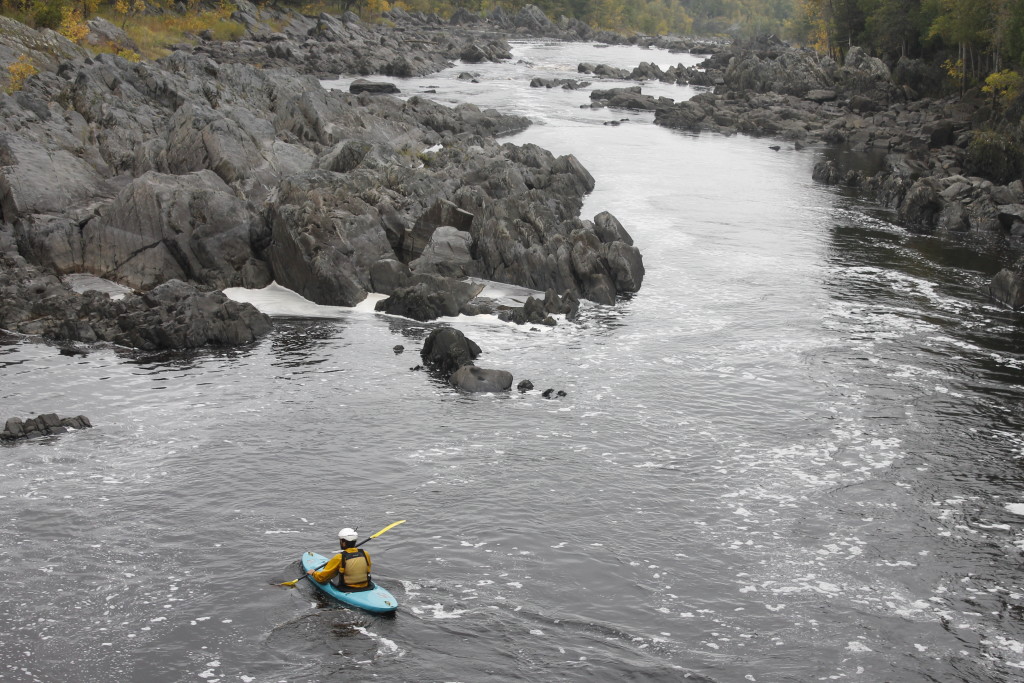
Starting my trip on the St. Louis River on the rapids below Thomson Reservoir. Photos by LeAnn.

Between the razor edges of stone, through the labyrinth of dark canyons, there runs a river, treacherous and rusty brown, that thunders over falls and flies into narrow places that would crush a boat.

The St. Louis River is beautiful and sinister at once. Its water flows over a massive slate formation, exposing it in spiny rock projections that jut up at regular intervals and identical angles. This regularity, gives the rock a whiff of gothic architecture. It was not a little bit unnerving from the perspective of my tiny kayak.

The other rivers in Northeast Minnesota that I’ve paddled are glorified creeks compared to the wide and powerful  St. Louis, which winds through acres of carved stone. The water was strong enough to build the world’s largest freshwater sandbar (It measures 10 miles long divided between the Minnesota and Wisconsin sides) in Lake Superior, which created Duluth’s shipping harbor.

British and French fur traders, descending out of the north country on their way to Superior, used to portage their canoes around the big rapids, following trails built by tribes before them.

Later, kayakers and rafters found out that those rapids could be pretty fun, if dangerous. The St. Louis is probably the most popular spot for whitewater sport on the North Shore, popular enough so that many guests on my guided sea kayaking trips have asked me if I had tried them out. My desire to try the St. Louis only increased as I built some skills on other North Shore Rivers like Temperance, Cascade, Popular, Baptism, Cross and Lester.

The section I wanted to try went through Jay Cooke State Park, starting  at the dam below the Thompson Reservoir to the Swinging Bridge in Jay Cooke State Park, and thither down to Oldenburg Point if time allowed. This is the section where I’d seen kayakers taking on rapids during  my ultra marathon back in July.
_MG_7015
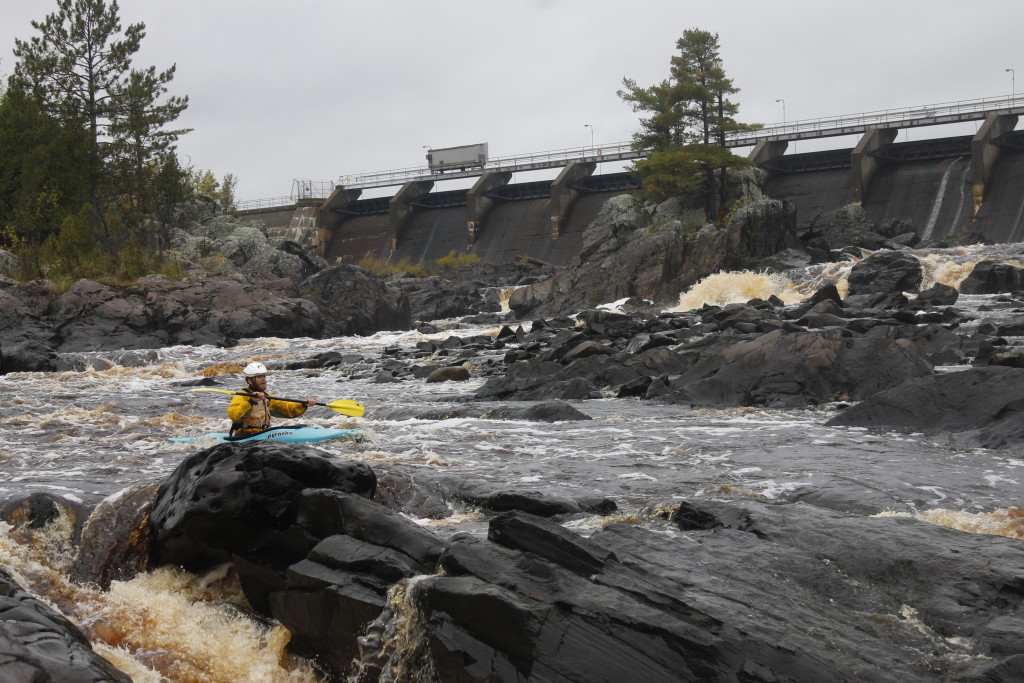
Put in below the dam. Check out the huge rooster tail of water coming off the rocks on middle right.

A storm earlier in the day had swollen nearby streams and increased the flow coming into the river. The sky hadn’t cleared, but left low clouds swollen overhead that felt like an oppression.

I drove out of Duluth with the boat on my roof and LeAnn sleeping in the passenger-seat. She was dozing after a 2 a.m. to early morning shift delivering newspapers for a friend. Although she could have stayed asleep at the apartment, she decided to be an awesome friend and go with me to shuttle the car and take pictures.

I was trying to get into the upbeat music coming from the college radio station. I couldn’t shake the feeling that what I was going to do wasn’t going to be fun exactly or that I was going through motions that somebody else had scripted.

As my third guiding season winds down, I have the same sense of malaise and uncertainty about what’s next. Some life questions were easier to push aside when every day was flat-out busy and planning for the future meant having boats and wetsuits ready for the next day.

It was already late, so LeAnn and I took an abbreviated approach to scouting. I checked out the falls near the dam, down to the Swinging Bridge and then went on to a section of river near Oldenburg Point. I parked the car on Highway 210 at one point to scramble along the rocks myself. The large fins of tilted slate made for tough footing; I found myself balancing on razor edges, slipping up and down rain-slicked slopes and into the puddles that formed between the ridges.

Moving with a kayak on one shoulder proved to be even trickier.

To make the sketchy hiking easier at the put-in, I attached a cam strap to my kayak and lowered it into the water, then I tugged it behind me like it was a reluctant dog on a leash. This made it easier to navigate the rocks than if I had the weight of the boat on one side.

The going was still slow enough that I decided to start my voyage in an eddy beneath the dam, rather than taking on some of the bigger rapids up above. Besides being convenient, this move may well have prevented me from getting smashed against boulders.

Downstream, a dark canyon loomed, with an overpass and railroad trestle perched above the troubled water. I had some feeling of unease that wouldn’t settle down. These were small rapids here. I’d gone through tougher stuff before. What was the big deal?

Lazy foam matted the launch eddy, cut sheer as it met the river current. I paddled easily through this with the kayak pointed 45-degrees upstream and let the river swing me around toward the rapids below. I navigated some standing waves and a couple of small ledges where the boat nose plunged into the angry water, bobbed up again.

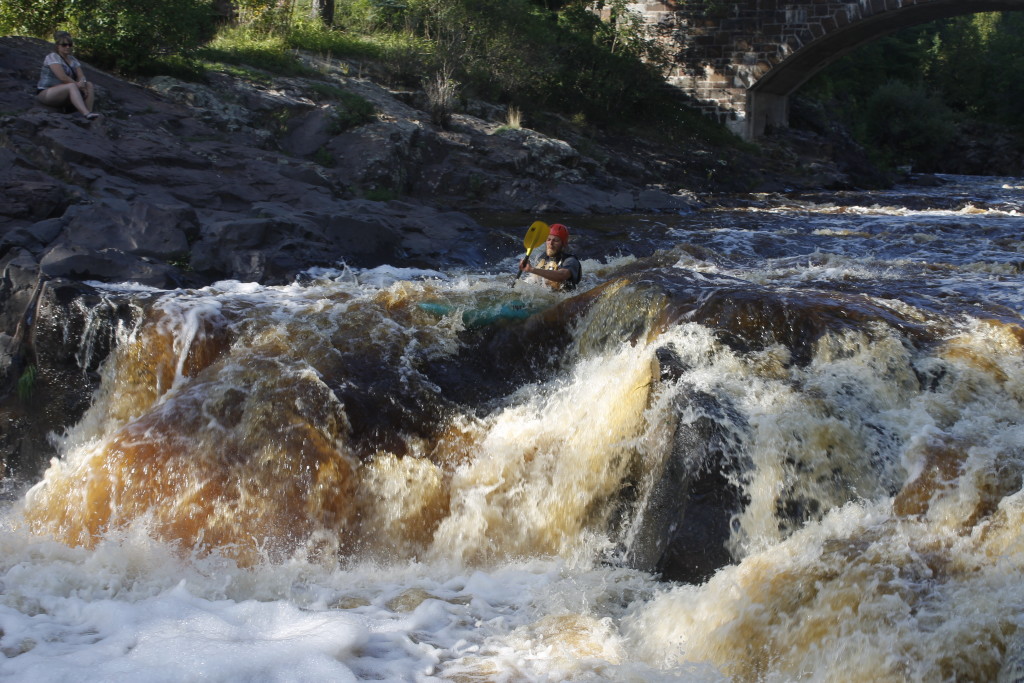
I went past the rock outcrop where LeAnn took pictures, then went through the boogie-water beneath the overpass.

Even though these were small rapids, the boat moved in unpredictable jolts. Some of this was no doubt influenced by the weird, angular geology below the current. My low confidence, no doubt, amplified the feeling of vulnerability. I deliberately hit the meat of a couple smaller rapids in order to tune up for the bigger stuff down river and to break my funk.
_MG_7020
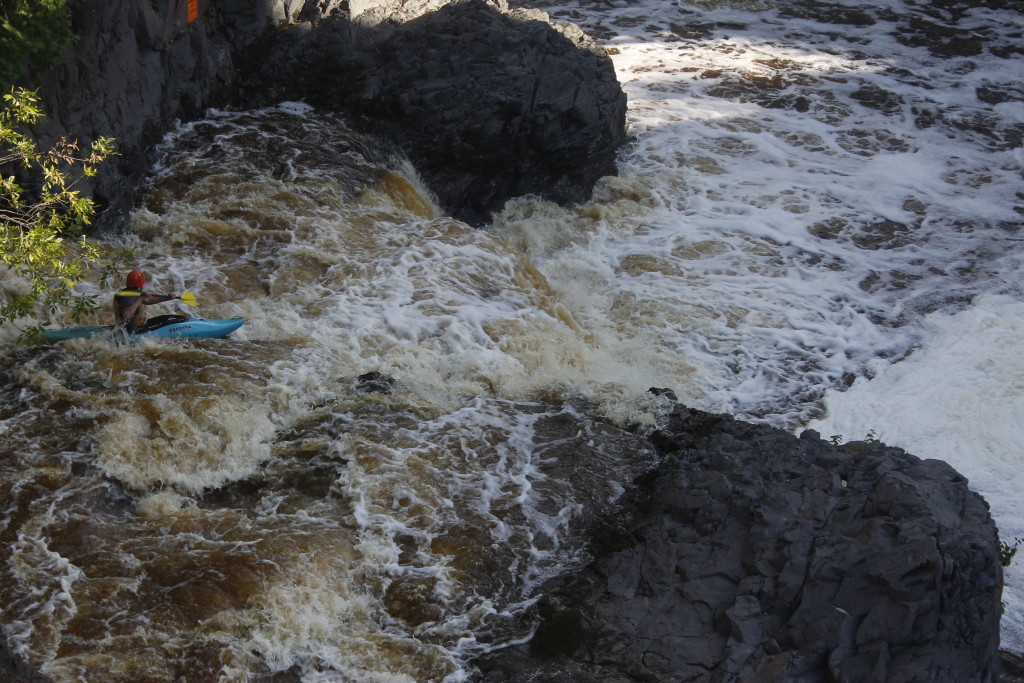
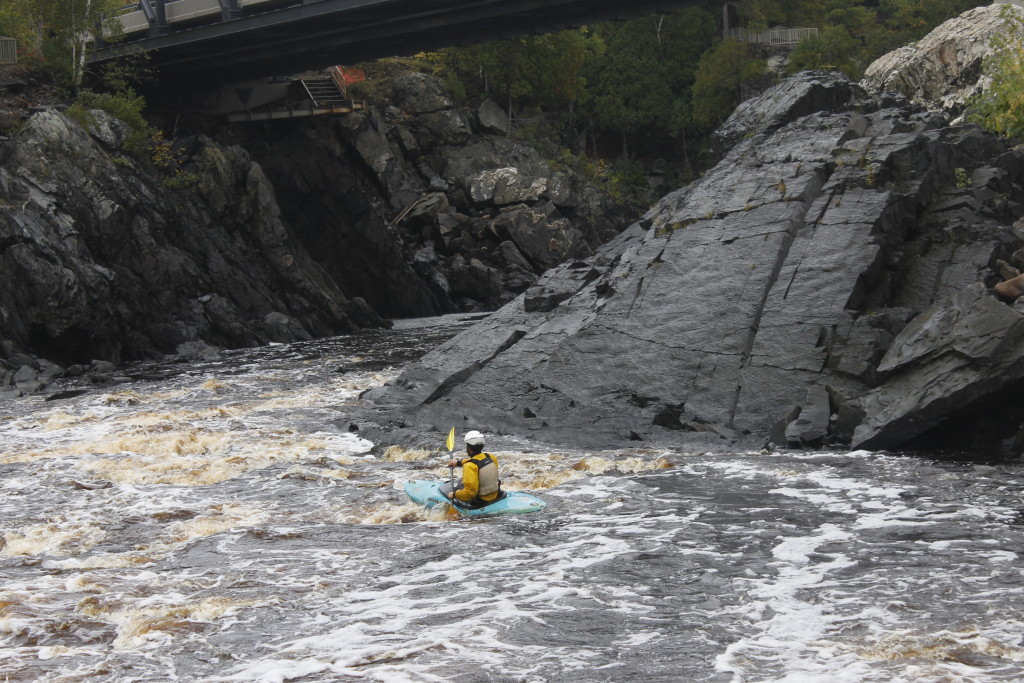
Beneath the Highway 210 Bridge

The canyon widened downstream, becoming skeletal landscape of slate outcrops. I felt that I was navigating something apocalyptic, the bones of the earth.

The rock formations consolidated into straight rows, like farmer’s furrows. When the rows were perpendicular to the river, they created still inlets of calm water, and sometimes dramatic drop-overs. When the rows ran parallel, they tended to split the water into narrows and create weird, sideways waterfalls.

Visitors to Jay Cooke State Park, get to see many different versions of this river, which exposes more geology when waters drop, and then takes new channels though the rock when the river rises anew. There were many empty channels along the river on the day I made my descent, indicating that the river was still low from the dry summer. The gauges readings posted on American Whitewater indicated about 1,800 cubic feet per second of flow.

Compare this to the massive floods that rocked the park in 2012.  55,000 cfs  stampeding down the gorge slammed into the Swinging Bridge, destroying its span. Even now, sections of the park and of Highway 210 are off limits because of flood damage.

I found myself on stretches of calm that gave way to shelves where I would drop three and four feet at a time. I hit plenty of rocks concealed beneath murky water.

One particular drop gave off a steady thunder as I approached. I had neglected to scout this section, (and forgot to bring the notes I had scribbled down based on the description on American Whitewater.)

I had decent momentum going, and was loath to get out of the boat for scouting. Fortunately, my wiser self got the better of me. I steered into a convenient eddy between two rock ridges  where I got out and hoisted my boat up.

I scrambled over the river rock formations to get in front of the rapid where I could look at it.

My first glance said, “No way.”

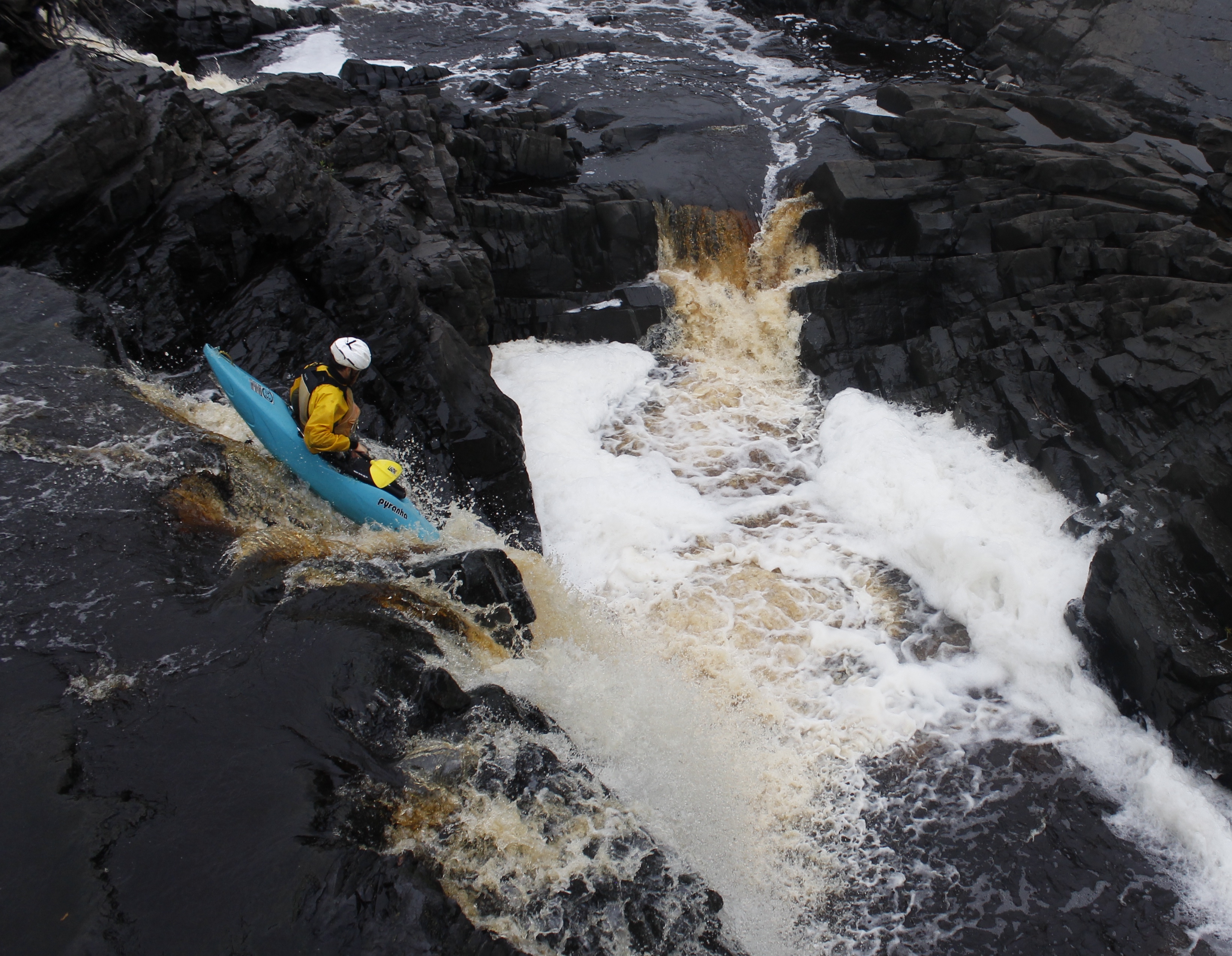
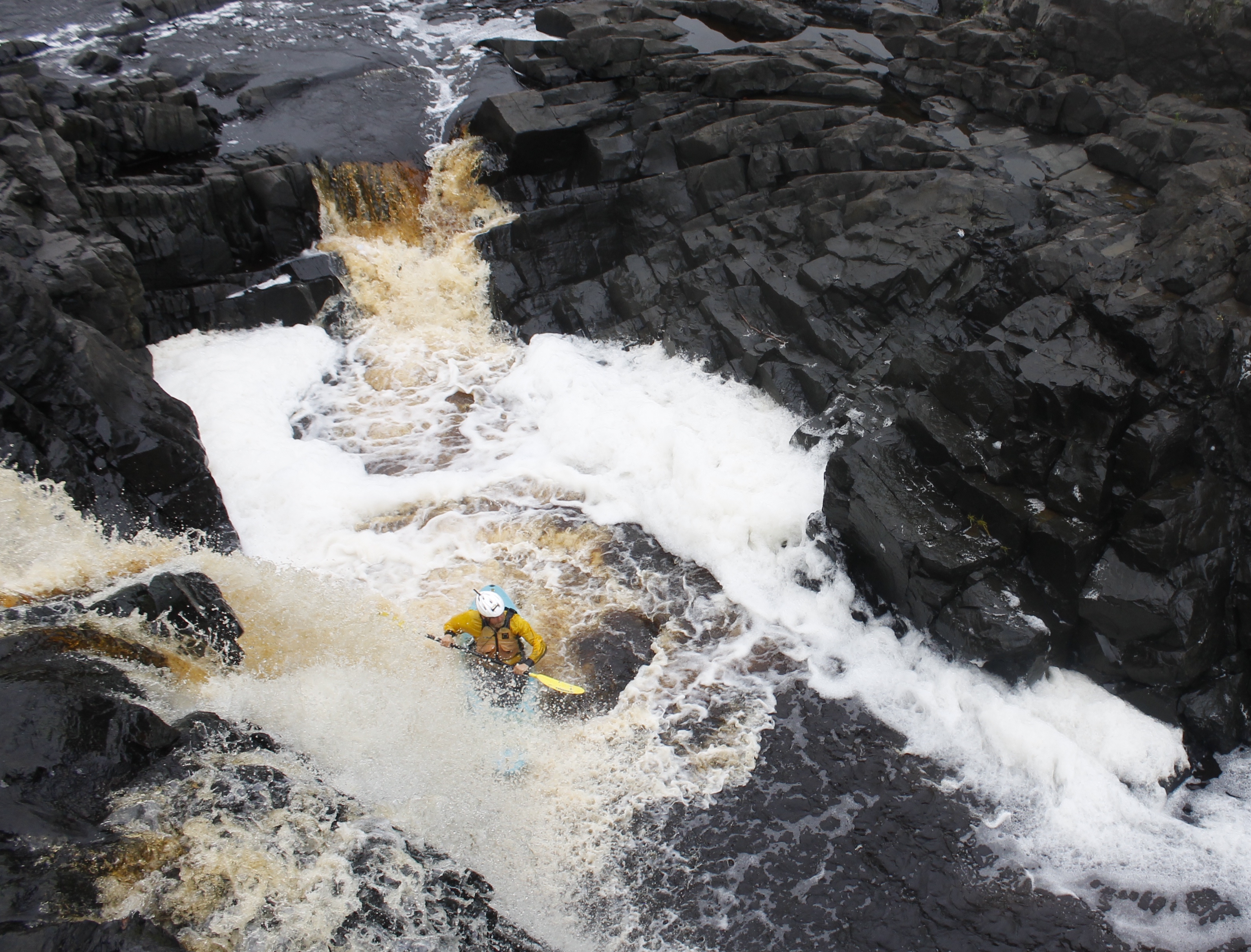
The water dropped into a narrow squeeze in the bedrock, where it raged in a frothy maelstrom of kinetic energy. The waves climbed higher downriver, indicating a powerful keeper hydraulic, maybe 8-feet of current flowed backward, toward the falls, meaning that after I flipped at the bottom, I’d probably get pulled back and sucked under, before popping up at the front of the hydraulic to start the cycle anew

This route was reassuringly fatal, in that I knew I could carry the kayak around it without feeling like a wuss.

But, then I had to go out further on the rock where I could see another channel. This one also looked freakin’ dangerous.

The moves started at the top of a divided falls. River left had a steep slope of high-speed water crashing down into a chasm, where it collided with a whitewater carnage train that fell down from river right and thundered out to where it exploded with the bedrock on its opposite side.

A paddler’s salvation depended on a very fast right turn, somehow maintaining stability while the water shoved against the cliff face and getting out of there. The likely flip foreshadowed a possible visit to the destructive keeper just  above where the current met the wall. And I had no idea if I could swim out of that mess.

Then there were those Red Bull kayakers I’d been watching videos of. Those dudes in a broad brimmed hats and perma-dopey expressions who shucked for a robot piss corporation could do these moves. That wasn’t quite the reason, I decided to run the rapid. It also happened because I decided to get into my boat and decide how I felt about things.

I paddled out into the current, caught another eddy, looked at the pour over. Got out of the eddy,  aimed my boat at the drop angling hard left. My hope was that the momentum would carry me through the carnage train and out of the rapid to safety. None of the planned route became visible until I started falling.

I don’t even know where I flipped, only that it happened very fast.

Next, I was getting thrashed around in high-velocity water, trying to do a roll, only one hard current or another to send me flailing. I feared that the current was carrying me toward the keeper zone so I bailed out. I popped up near a rock wall with no idea where I was in relation to anything else.

The water current was taking me downriver, and luck had kept me away from the keeper.

With upturned boat in one hand, and paddle in the other, I kicked toward an eddy between two slate ridges. Safety. My pounding heart felt like it would break my ribs and pop my skull. That would be the kicker, to swim out of the melee only to get zapped by a heart attack.

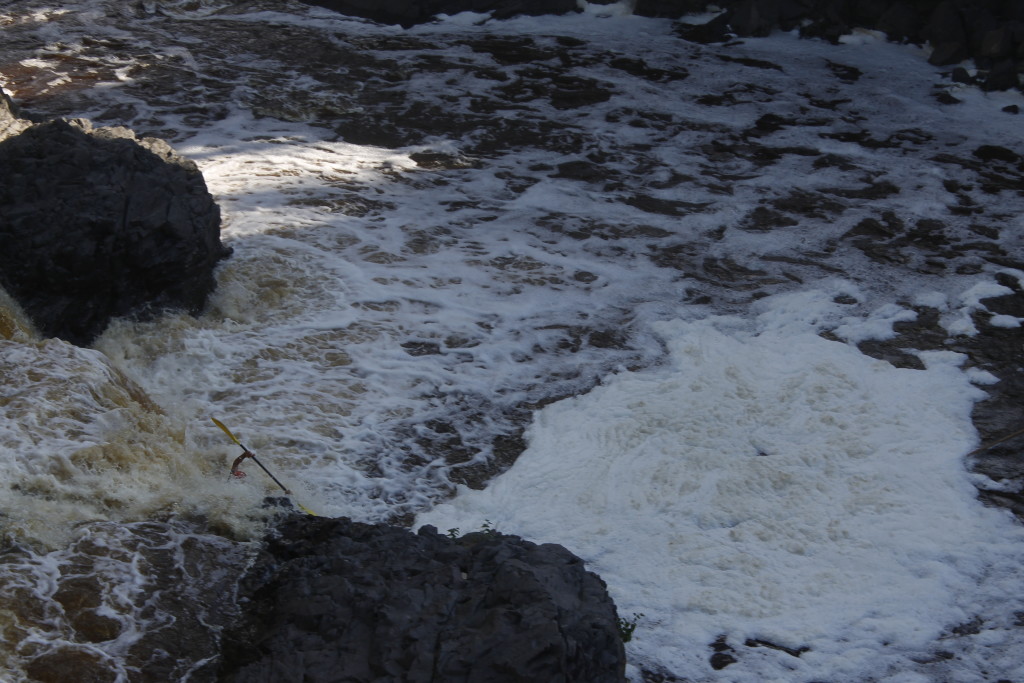
The eddy was filled with foam — fluffy, playful stuff that floated several inches above my head. I had to thrash my arm around to create breathing space. How heavenly and gentle the foam was, child of the hellish waters upstream. I was lucky to have ended up here.

I struggled with my water-filled boat to a ledge where I could flip it over and empty the contents.

If I hadn’t caught this eddy, I would have likely gone over the next rapid as a swimmer. I took a minute in my seat to get my breathing right and my head together, then pushed off.

When I made it through the drops and turns of the second rapid, the river mellowed to a slow boogie through the bone-fields, with small sunken rocks hiding beneath the murk.

LeAnn was waiting near the Swinging Bridge, and it had already me much longer to get there than I planned. I worried that she would be worried. It was already getting late and I decided that the bridge would be a great place to end the day. The rapids downstream from there had definite flip potential and I wasn’t feeling it.

There was one last rapid in the train, which featured a nice 14-ish foot drop into a pool.

I’d posted LeAnn near this edge to take photos.

I took my time setting up for the descent. There were some jagged rocks jutting out of the cliff where the water poured over. To avoid them, I aimed for a certain shrub on the opposite shore that I had scouted earlier, hoping that it was the correct trajectory.

Of course, I wouldn’t know if I got the approach right until I was falling.
 

_MG_7025

_MG_7026

_MG_7027

_MG_7028
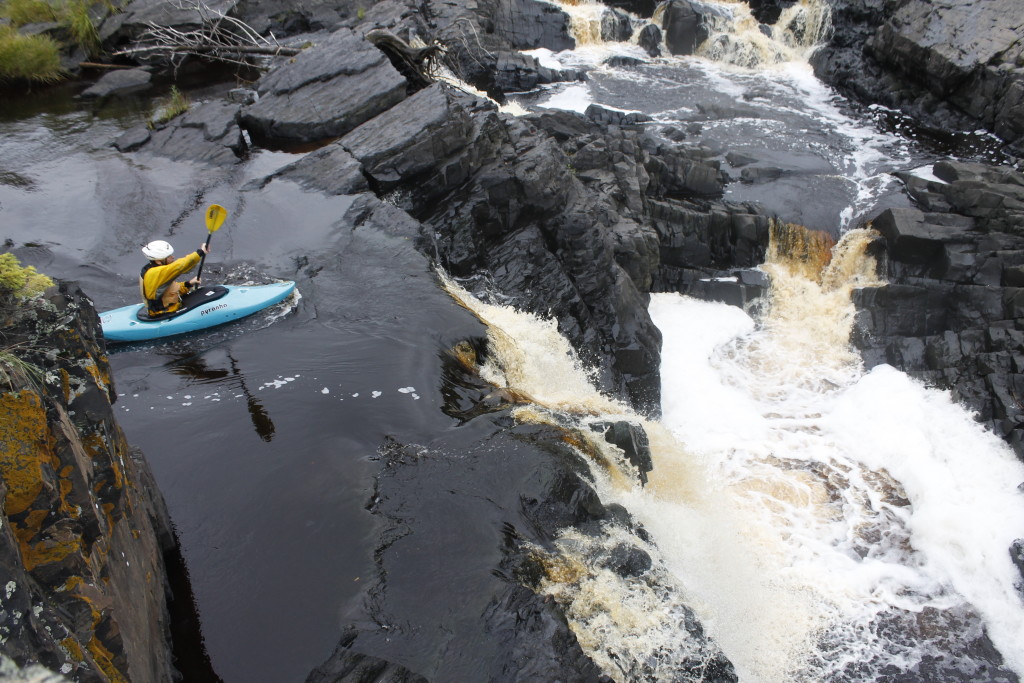
Made it! I did use a pretty bad habit of leaning backwards however, which increases back injury risk. It did  reduce the risk of breaking my nose when I hit the water.

There was that roller coaster tug in my guts as the kayak’s nose sank. The brief moment of weightlessness followed by the smack of water against the bow, sinking in up to my chin, then a desperate paddle flail to keep the boat upright. It worked.

LeAnn cheered as I swung away from the small keeper created by falling water.

I pumped my fist.

There was a beach beneath Swinging Bridge where I could bail out.

I thought about keeping on the river, and seeing how I stacked up to some of the big rapids downstream.

My appetite for rapids was less than my appetite for dinner, however. I headed for the beach.

“Are you sure?” LeAnn called.

I wasn’t. But I committed to the decision.
_MG_7037
Here is a shot of me from the Swinging Bridge that shows some of the bizarre rock formations in the river. Check out how all the slate is tilted to one side.


Further Reading:

Info on park geology and history from the Minnesota Department of Natural Resources

http://www.dnr.state.mn.us/state_parks/jay_cooke/narrative.html

Info on rapid names and river levels from American Whitewater:

http://www.dnr.state.mn.us/state_parks/jay_cooke/narrative.html

Info on 2012 St. Louis River Flooding:

http://www.twincities.com/ci_20940630/duluth-flood-water-levels-dropping-along-st-louis

http://www.dnr.state.mn.us/state_parks/jay_cooke/narrative.html

http://www.dnr.state.mn.us/state_parks/jay_cooke/narrative.html
The Lazy Gardener and His Yield

_MG_6942
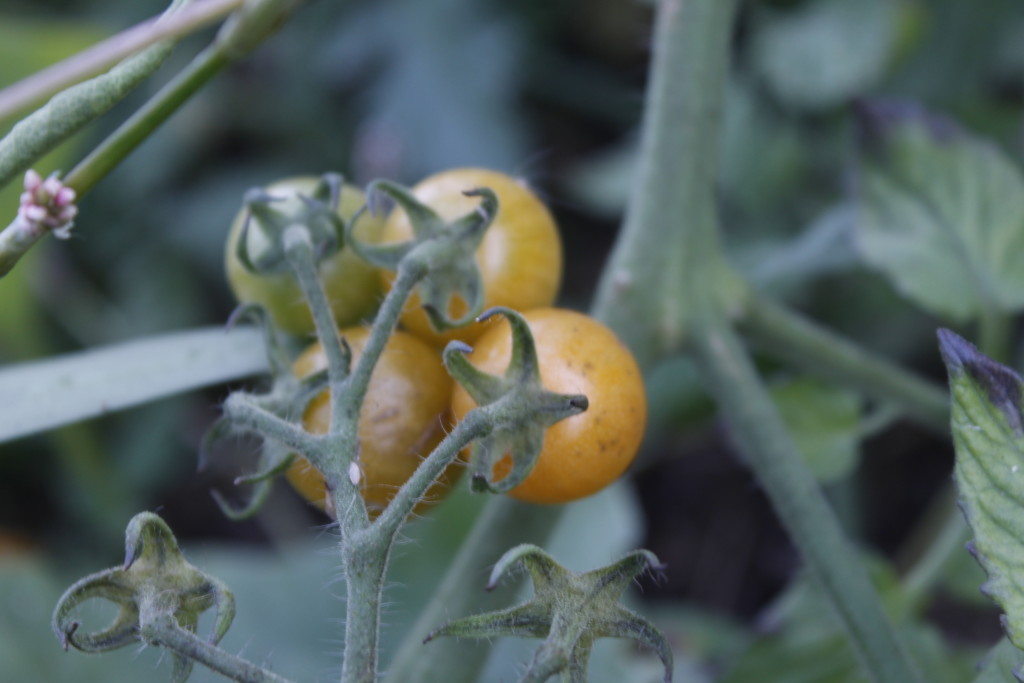
Fresh cherry tomatoes ripen on the vine within in my small garden

I’m not a huge fan of the caterpillar holes in my kale, the little green turds that the caterpillars leave, or the sight of their fat, green bodies crawling around the leaves as they chew out sections.

I pluck the leaves anyway, washing them thoroughly before I chop them into my stir-fry.

I’m such a half-assed gardener.

I take my bike out in the morning, peddling over to the greenhouse that my neighbor built, fill watering cans in the rain-barrels and wave them recklessly over the tumbled greenery. If I should cross an unlucky caterpillar, I’ll crush it between my fingers. I acknowledge the invasive Canada thistle and the inroads that it has made among the useful plants. I should take care of that before it gets out of hand. 

Two-thirds of the greenhouse is actually weeds. My neighbor, who set up most of the infrastructure I’m using, is taking a year off from organic farming so that he can catch up with other business commitments. I have commitments too: to work, to the ultra marathon training earlier this summer, as well as my  recreation and leisure time. The latter can be demanding.

Hence, I’d thought it wise not to try and take the entire greenhouse under my management. The weeds get their portion and I work to make a decent garden out of mine.

Maintaining a small empire allows me to improve on domestic policy rather than wage costly (in effort) foreign wars on the weeds outside my borders. I provide my subjects with water, pruning and some weeding and insect pulling. I tax them by harvesting their leaves and fruit.

I walk among the ranks of kale when I get back from work in the early evening.

If my garden were Dubai, the kale would be the oil coming out of the ground. It keeps on giving. I’d emptied out the entire packet of kale seeds at the start of the season when I figured that this would be the best way to make sure that something grew. Also, I don’t mind eating kale all the time. In fact, I eat it almost every night.

Behind the kale in productivity, I have my cherry tomatoes, which add color and panache to my cooking. The fruit grows in orange clusters — and I’m not just using the technical sense of the word when I call it fruit. It is deliciously sweet, the way an orange or apricot is sweet, but in its own tomato-y way. I’ll eat them off the vine, or put them in a stir-fry, leaving them whole in the frying pan to trap the flavor beneath the skin.

The peppers are small and few,  an occasional treat.  Small cantaloupes and muskmelons fatten on the vine.There were about a dozen ears of sweet corn also. Not the best yield by Monsanto’s standards, indeed not a  great yield for the standards a dedicated gardener, but for I’ll take what I have.

It can be hard to find the chance to tend garden when you live life on the move. Because I rent in this state, haven’t been here long, and plan to move again soon, it is hard to motivate myself to build soil beds, erect fences, or undertake any such long-range improvements that can only benefit me for one season.

If I stayed in one place, I could allow improvement to build upon improvement. The work put into bettering the soil one year can improve yields for years to come.

On the flip side, it is harder to build on success when you are starting over each season. There are the many hours of repeat work that goes into new fencing, new pots, new work clearing a plot of land for planting. The gardener who stays rooted in one place has more time to learn the challenges and character of the land.

The rooted gardner is also in a better position to comment about the changing environment. Such people have an investment to protect. They develop what naturalist Aldo Leopold describes as a “Land Ethic,” wherein farmers, hunters and gatherers learn to protect the land not only because they profit from it, but of the love they develop for it over time. That relationship drives them to stay and fight where others would look for new soil to dig up.

It is easy for rooted folks to distrust the drifter, someone who could chop down the family orchard for a quick buck, and move on to the next venture.

Now, more than ever, our money and our sense of gratification, move at light speed. A package from Amazon arrives far quicker than the time it takes a flower to become a fruit. We can reward ourselves with a thousand clicks online with less effort than it takes to cook dinner.

I realize, though I loathe admitting it, that this impatience is very much a part of me. Many times, when I was digging the ground or putting seeds in, I wondered if I would get distracted by something and let the garden fall by the wayside.

It was the sight of those first green shoots pushing up through the dirt that built my commitment. If I neglected the garden then, I would be failing the life that I had propagated. I needed to keep it around long enough so I could eat it.

One blessing I found in the garden, was that the plants I’d put in the ground had their own interest in being alive. As the plants began asserting themselves, I had less work to do. Perhaps, I had put the kale seedlings a little closer together than ideal for growth, but this helped crowd out the weeds.

And eventually, even my half-assed gardening yielded food, mostly the kale, which has come in fast enough so that I can eat it every night. And why not? It tastes great in stir-fry, it’s healthy, and a few bug holes don’t ruin it.

Fresh veggies are expensive here in Northeast Minnesota. Taking this one expensive item off my grocery list has saved me hundreds of dollars without compromising healthy eating.  The cherry tomatoes, which develop quicker than full-sized ones, are a nice investment too. If one cherry tomato goes bad, it’s far less of a loss, than if it had been a beefsteak.

Which isn’t to say that I don’t think about how much more the garden could have given if I’d put more time into it. The other day, I helped tend a garden at a nearby home where potatoes, beets and onions grew in abundance. Such root vegetables, seemed like a pretty good investment for a small amount of time.

I can look at that well-manicured garden and think, “good job,” reflecting that hard work was rewarded in kind by nice yields. Those fruits are worth more than mine, because they were tended with an abundance of love, focus and dedication.

My garden could be a parable of human failure, how our throwaway society has instilled in us the fallacy of expecting much reward for little work. But I am in no mood to expound upon the garden I don’t have. The treasures from the real  garden, however modest, motivate me better. It is a lazy yield, but it is my own. Therefore, I will take that bite of caterpillar-damaged kale, stir-fried with cherry tomato, and I’ll think, “Not bad.”


The Lester Test

_MG_6906
The first drop on my run down the Lester River. Photo credit to LeAnn.

The Lester River was the first stretch of whitewater that I’d encountered  in Minnesota.

I was just driving out of Duluth on the way to start my sea kayak guiding job last June, when I happened to look to the left side of the road to see an angry slice of high-velocity water churning through a   rock canyon.

“Whoa!”

I pulled my car into a puddle-strewn parking lot nearby and got out to look at the rapids.

The water ran reckless through narrow channels in the basalt, going over drops and throwing itself up several feet into the air whenever it encountered an obstacle. The late 2014 snowmelt fed the beast, as did the heavy rains of the last two days. I felt humbled but also energized by the river’s raw power. Just walking around the slippery banks, peering into the maw of one of the mean hydraulics gave me all the adrenaline I needed for one day.

It would be over a year later before I finally ran the section in a kayak.

Labor Day. The so-called last day of summer brought the crowds out to Lester Park. Situated on the eastern edge of Duluth, the park offers miles of trails for mountain biking, cross country skiing, running and hiking beneath tall stands of white pine. And then of course, there’s the river itself. The swimming holes beneath the falls were an attractive draw on a day when temperatures were in the 80s. Teenagers took to the cliffs for jumping, high enough to put a knot in my stomach and even more nerve wracking when they climbed up on trees so they could get higher yet.

I arrived with my friends LeAnn and Tammy, with whitewater yak cam-strapped with a cardboard sheet onto the roof of my ’93 Mazda Protege. Watch out world. Here comes the pro.

Since it was such a warm day, the three of us decided to take a dip in one of the pools. We opted to avoid the place with the crowds and found a smaller pool upstream that was below a falls. The rainfall during the last couple days had brought the river level up considerably, (though not as high as it had been on my first visit.) Brown tannins and sediment slushed together in the current, created a swirling eddy where we jumped in.

Rafts of foam spun around us. I gathered some into my beard. It smelled like dirty pine needles. I found out that I could climb to the top of a small falls and slide down on my butt. LeAnn and I took turns going over the drop, until I was so cold that I had to lie down on some black river rock to get warm again.

I did not volunteer to try any of the cliff jumps.

Finally, it was time for me to grab my boat. I did a quick scout along 3/4 of a mile of river, stopping to go out on a railroad trestle where kids were (again) jumping into the river. The gnarliest rapids were between Superior Street and the trestle and I spent a good time looking them over. Unlike the first time that I’d gazed upon them however, they no longer seemed impossibly dangerous.

There was a 6-foot drop before this, which looked fun, if not particularly hazardous to life and limb, and then there was a small drop after the main rapids, which I didn’t pay much attention. After that, the river smoothed out and flowed the rest of the way to Lake Superior.

I got LeAnn to volunteer with the camera, took the boat off my cardboard carrying rack and started walking up a trail along the river. It was hard to determine where to bring the boat down because the banks were steep and the further I went, the more tempting rapids I saw. Nonetheless, I knew I couldn’t keep everyone waiting forever, and ended up taking a fishing path down to a broken dam.

I put the yak down on some shattered rocks and eased myself into the water.

There were no big rapids yet, but the river moved fast. I shot between the pine trees on the banks, past boulders where the water pushed itself over the tops. There were a couple small drops that sent the water splashing up to my waist, up to my t-shirt. It was unbelievable that I was doing this in a cotton top instead of my usual wet suit and nylon splash jacket. The air and water were that warm.

Finally, I shot beneath a foot bridge and down the 6-foot drop into a pool. A crowd of onlookers cheered. I hung around in the eddy for a while so that LeAnn could get further downstream with the camera.

_MG_6907
Dropping off the with a convenient eddy waiting on my right side.

This was where the river got narrower, where it put the fear in me.

I tumbled over a concrete weir, paddling hard to get past any keeper hydraulics that might be waiting there. On the overpass ahead of me I saw LeAnn aiming the camera down to the river That was where the rapids started. The shadow of the bridge cast the river into a darkness, as if I were entering a gaping mouth.

I took a quick look up to LeAnn, and then put all my focus on maneuvering.

The sky disappeared. I steered my boat through the twists and drop-offs in dark water.

The light at the end of the tunnel was the sun glinting off the waves and foam of the big rapid. The one that I had spent long minutes staring at last spring, wondering if I could pull it off.

A nice thing about being on the water, is that once you’re moving, there is little time for morbid contemplation.

Here was the steep slope and narrow slope of water with a drop-off on the righthand side. Now I was going down it.

My trajectory was taking me straight for a massive wall, but I had planned for this. I paddled upstream and to the right, (overcompensating) and was briefly fascinated with the fact that I was trying to paddle uphill. If I could just muscle it a couple feet to the drop-off, I would be home free. Somehow, I got there. The nose of the kayak dropped away and sent me plunging down into the pool below. I went neck-deep in water, then bobbed neatly to the surface in a still patch of river.

_MG_6915
Coming out from the bridge and into the rapid, I need to turn right, and fast.
_MG_6916
I paddle for all I’m worth to avoid getting shoved up against the wall on my left side.
_MG_6917
Over the drop

I looked up at where I’d come from. It had been way to the right of the route, I’d planned originally, but it had worked.

I looked up to the bridge, and pumped my fist for LeAnn who was cheering.

I relished the moment, then turned to the last drop on the river which lay beneath the railroad trestle. It was a short little thing. No big deal. I lined up and shot over the edge.

I plunged into the water, expecting the momentum to carry me easily toward the finish line.

But, hey, that was funny. I wasn’t moving forward. Actually, I was moving backward. The rapid had fixed      a tractor beam on my boat’s rear end. I felt more annoyed than anything when I started paddling hard to get out of it. The next thing that happened was that the nose of my kayak went into the air, and I plopped backwards into the water.

Upside down in the swirling river, I had a moment to reflect on the value of staying vigilant. I also set my paddle for a roll, taking the time to get my paddle right so I didn’t screw it up. I dug with the blade and flicked my hips. I was back in the sunshine. The trestle jumpers were cheering. The keeper had relinquished its hold so I could float down the river like it was no big deal.

Beautiful willows sprawled out across the placid water here. The Highway 61 bridge framed the water of Lake Superior in a welcoming arch. I let the muddy current carry me out into the lake, where I could look across to the grain silos in Wisconsin, the tall buildings in Duluth’s downtown.

I got out on the beach, and walked the kayak up toward LeAnn, who met me by the road.