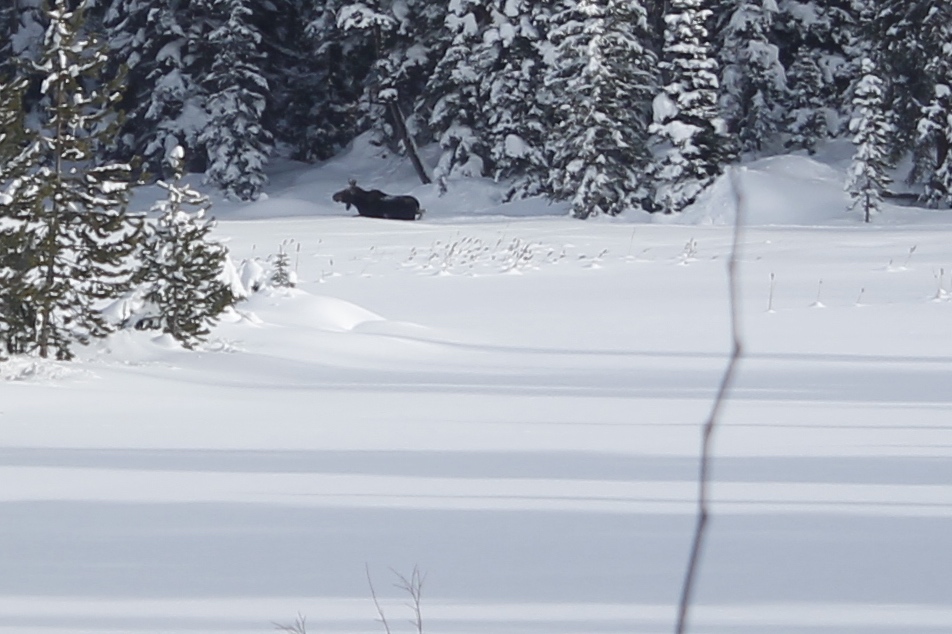
The moose moved through the deep powder in an awkward, bucking lurch.
There was nothing elegant in its stride, but it was movement, and that was what counted out here.
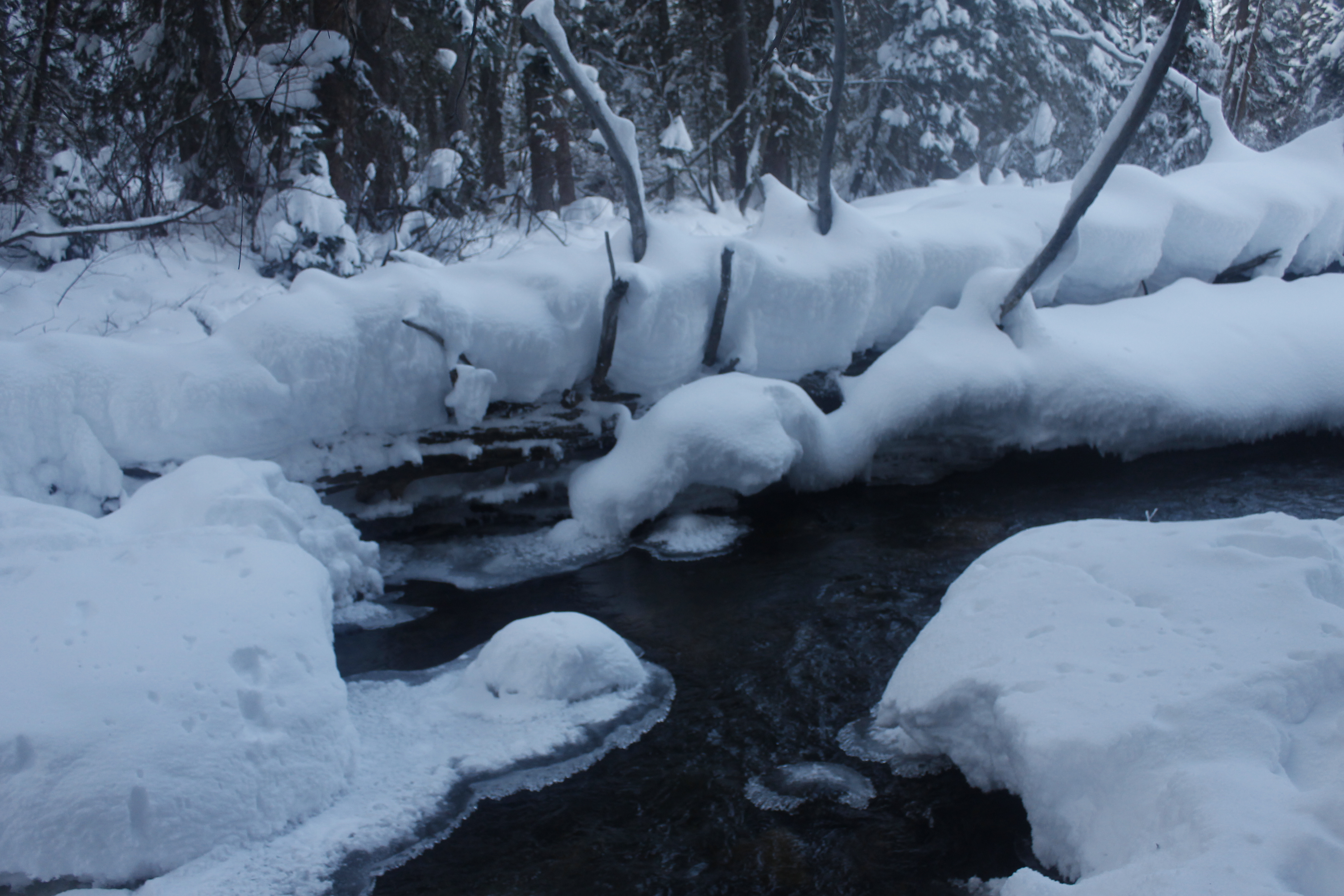
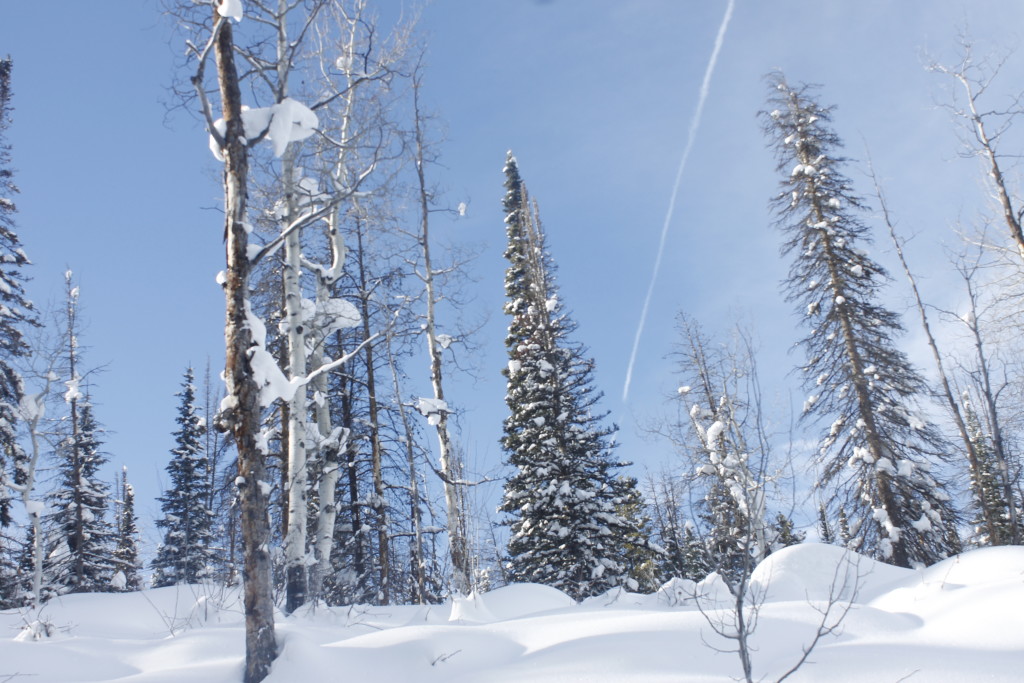
Stillness seemed to be the rule in this Rocky Mountain valley — its contoured architecture of snowdrifts, the pendulous gobs of powder hanging like oversized Christmas ornaments off the branches of the pines, frost feathers creeping out of aspen bark in minute increments, the stolid cliff walls rising above it all, going up to where the distant white monuments of Big Agnes and Mt. Zirkel shone indifferent to the blue sky.
Even though it was hardly a speck in my field of vision, the thrashing moose was a distinctive element against the otherwise quiet tableaux. No, the moose was not charging at me; It was merely crossing from one side of a frozen lake to another. I have no way of knowing if it was aware of my presence, though when I consider that I have seen moose stare at me with blank indifference, I doubt that my arrival was scary enough to spook one this time. Some other business…
The animal’s long, spindly legs were meant for exactly the kind of deep snow that lay in the valley. The long legs allowed its hooves to sink down to solid purchase while keeping the bulk of its frame above the surface. Even with this engineering, it still rocked up and down like a boat in rough water. No doubt, the moose was burning many of its hard-earned winter calories to get anywhere.
The skis on my feet were another way to get around in the snow, one with respective advantages and disadvantages.
I had spent the last couple hours figuring them out as I made my way up a drainage coming off the Elk River.
My backcountry Nordic skis were chattery on the packed trail, and badly wanted to backslide. When I cruised out into the powder, however, the ride smoothed. It was a slow, steady progress through the foot or so of snow that lay above a stiff, crusty layer. Fallen trees that would have been no big deal on a summer hike became strategy problems that required me to take awkward, potentially compromising steps around sharp branches.
There was no elegant stride and glide here. I moved nothing like the way a track skier would tackle a groomed trail, more like a snow-shoer, taking big waffle-stomping steps. I got a little extra glide here and there when I got lucky.
I found a patch of sunlight in a clearing where I ate lunch, shed a jacket and attached climbing skins to the kick zones at the bottom of my skis.
The friction of these synthetic fibers gave my skis a better brake against gravity, allowing them to kick downward to glide upward. The skins not only helped with the inclines but added much needed purchase when I needed to get over dropped trees. The trade-off was that I had even less forward glide than before.
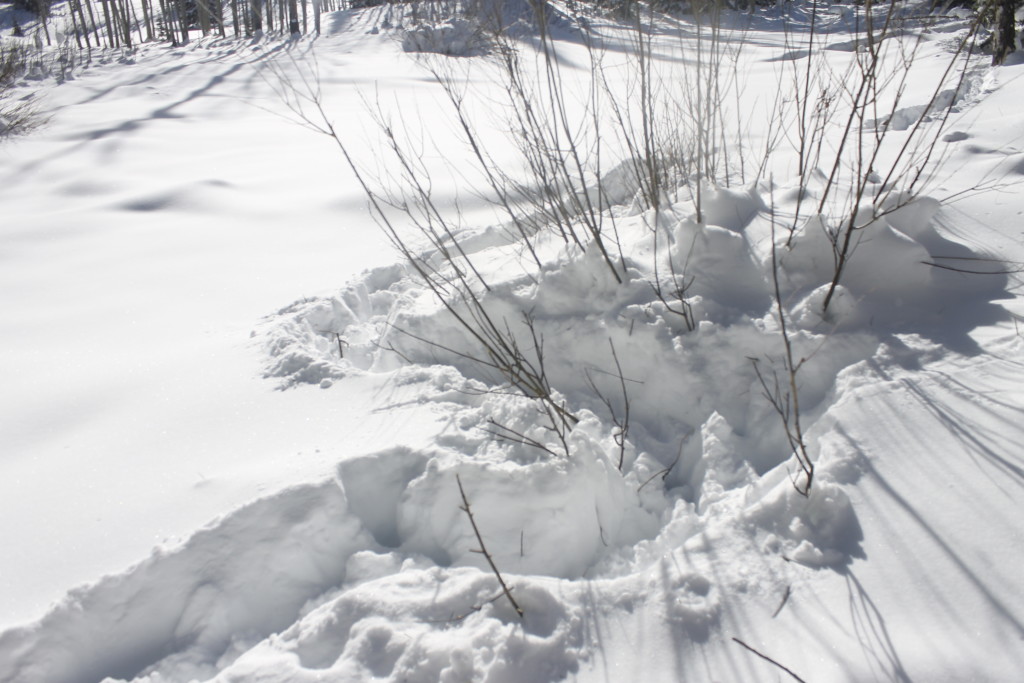
A band of willow shrubs marked the buried watercourse I was following. Here and there the moose and elk had gnawed at the young tips. I slid over their icy footprints as I climbed.
Hunters, sliding on skis with animal skins attached to the bottoms, have pursued big game this way for millennia, traditions that live on in places like northwest China. Mark Jenkins accompanied one group that still uses skis to pursue elk, and wrote about his experience in a fascinating article for National Geographic: http://ngm.nationalgeographic.com/2013/12/first-skiers/jenkins-text.
Because the skis gave the hunters the ability to float above the snow, they were able to chase an animal down to exhaustion, then attack at close quarters.
A 21st century vegan like me is unlikely to use such techniques anytime soon. I nonetheless respect the consideration and engineering that the ancient skiers used to conceive a tool that would enable them to master an environment that human bodies weren’t designed for. When human ingenuity took a seat in the designer’s chair, it came up with a myriad of different models, ways to make awkward bipeds as at home in the snow as an elk or snowshoe hare.
It may seem basic to modern skiers that their equipment consists of should use two skis of equal length, along with two poles, but there are old models where travelers used a long glide ski and a shorter kick ski covered with rough animal hide that enabled the skier to move around like a kid on a scooter. The hunters Jenkins travelled with used only one long wooden pole instead of two, and — going against everything I teach beginning skiers — they leaned backwards with it going downslope.
What matters most about technique is whether it works, and in the hunters’ case it did, refined through centuries of observation, practice and thought. Jenkins, an accomplished adventurer with a modern set of Telemark skis, had trouble keeping up.
As I went up the willow drainage, I wanted to approach my adventure with the hunters’ mindfulness of the environment, if not the horsehair skis and single wooden pole.
The snowy landscape forced me to consider questions: How I could get up a steep wooded slope without pointing the skis past the threshold where they would slide backward? Was it was worth the improved speed if I took the skins off in order to glide over a half-mile of flatlands before I came to the next incline? Would the skis catch slush beneath the snow if I travelled out onto the frozen lake? Would there be a slippery ice crust waiting on a south-facing slope?
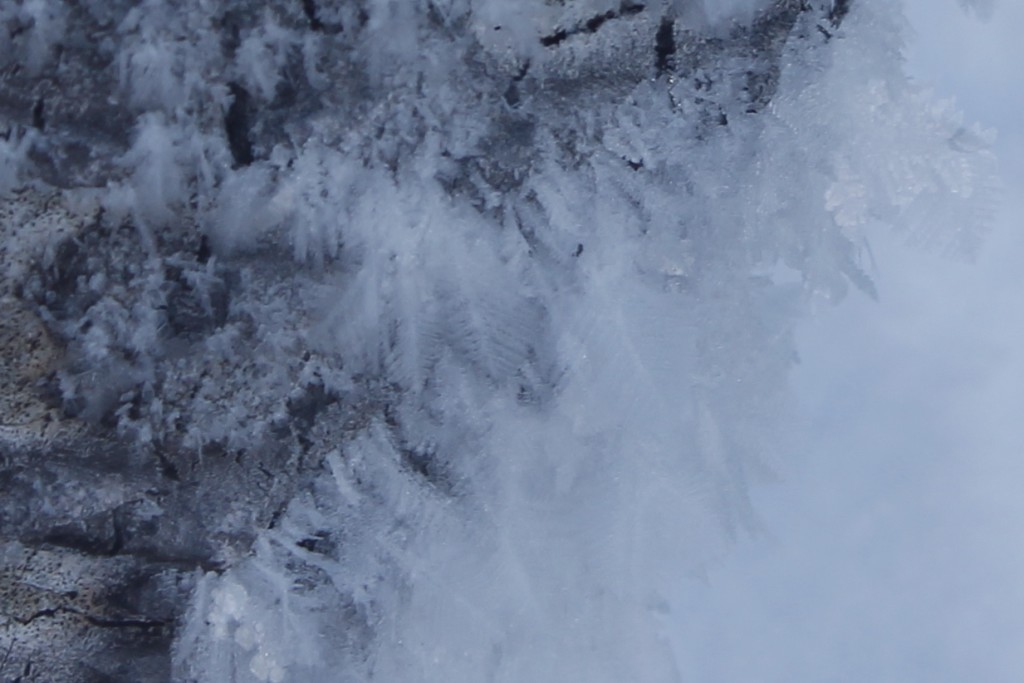
The mental acrobatics would have been even more rigorous if I’d gone out on waxable skis*, which require the skiers to match the wax they use with the properties of the snow crystals so that they can get the best grip and glide.
All of these considerations are part of reading the language of snow. Reading snow means being able to travel over where the moose plunges through. It makes it possible to get far into the backcountry and come back safely and knowing when to expect ice on the slopes or where an avalanche is brewing.
Learning this language may not have seemed important to me when I needed to scrape said snow off the windshield of my car and rely on the internal combustion engine for transportation. Indeed, the language may not seem so important to anyone when once reliable snow recedes (like the moose) from places like New England, Minnesota and all but the highest mountains and the northernmost reaches of the continent. Knowing kick waxes is already about as relevant to most people as knowing how to chase an elk down in the powder.
Given all the time and effort that human beings have put into perfecting skiing, it seems especially tragic to think that technology and climate change may someday render such knowledge irrelevant.
After the moose pond, I came to a steep ridge, impossible to ascend even in my climbing skins. Maybe, I could have pulled it off in snowshoes, the kind native tribes used for travel in North America. When I took my skis off, I found that I couldn’t climb the mountain; for each step I took up, I sank down exactly the same distance. It was time to get down from the hills.
I skied back inside my tracks. Only at the steepest sections did I veer into the unbroken powder to break speed. A couple days later, some friends were able to use the tracks I’d left on their own adventure. I hope we keep the trail broken all winter.
- The term “waxless skis,” in reference to the type of skis I was using, is a bit of a misnomer. Skiers in waxless skis still put glide wax at that tips and tails of these skis to boost speed. What makes these skis different from traditional waxable ones is that the waxless skis have scales or other groove patterns in the kick zone, an area beneath and in front of the ski boot. When the skier kicks down and back, the grooves stick in the snow and provide the friction needed to push off and move forward. Waxable skis also use glide wax at the tips and tails, but the kick zone is smooth and there is a stickier kick wax that goes there, also designed to stick into the snow.
One advantage of waxable skis is that you can tweak the grip of the kick zone depending on how spiky or round the snow crystals are. A hard kick wax will work well on a cold day when the snow crystals have sharp points to drive into it. A softer wax becomes necessary not to slide backward as the temperature warms or the snow gets worn down — leading to rounder crystals that don’t like to stick into wax.
If this sounds easy to screw up, it is. But, it appeals to the wonk in people the way many still enjoy the control that manual transmissions have over automatics (with an equivalent risk of stalling and grinding gears.) I had a bunch of “fun” playing around with my new pair of waxable skis in Minnesota last winter. I learned the importance of bringing extra kick wax on trips after I stripped out the bottoms of my skis five miles out from home and had to learn how to skate ski in order to get back.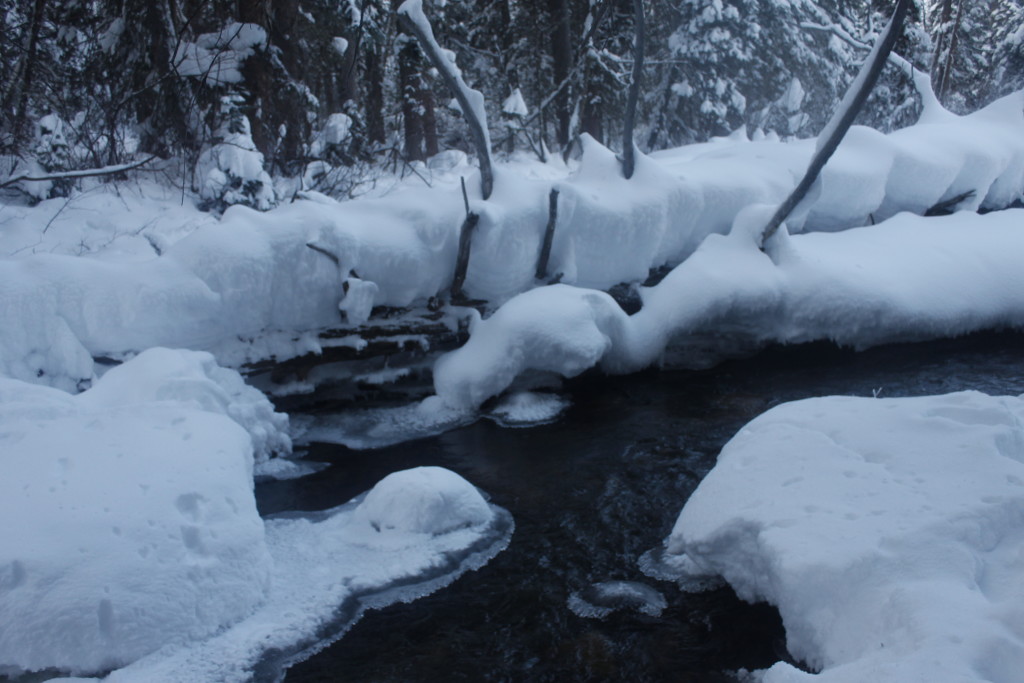
Snow along the south fork of the Elk River exhibits some of the funky contortions and graceful shapes within the winter landscape.